
“YOU WANT TO DESTROY MY PLAYERS? THEN DESTROY ME FIRST!” The furious words reportedly exploded from Craig McRae after the emotional disaster surrounding Collingwood Football Club spiraled completely out of control following their brutal and chaotic defeat against the Geelong Cats. What initially looked like another fierce AFL rivalry clash quickly transformed into one of the ugliest media storms Australian football has witnessed in years, involving concussion fears, accusations of dirty tactics, massive online outrage, emergency AFL meetings, and deeply emotional scenes inside the Collingwood dressing room that left even experienced journalists stunned.
By the end of the night, the result itself no longer mattered. The entire country was talking about fear, pressure, public humiliation, and the growing sense that the AFL was descending into an uncontrollable emotional crisis.
The atmosphere inside the stadium had already become dangerously hostile long before the final siren sounded. Every heavy tackle triggered furious reactions from supporters, while boos echoed across the ground after nearly every collision involving Collingwood players. Geelong fans accused the Magpies of crossing the line physically, while Collingwood supporters screamed back that the Cats were exaggerating contact to manipulate umpiring decisions. The tension escalated quarter after quarter as players from both teams threw themselves into increasingly violent contests, with commentators repeatedly warning that emotions on the field were reaching a breaking point.
Even veteran AFL analysts admitted during the broadcast that the match no longer felt like ordinary football and was beginning to resemble something much darker and more personal.
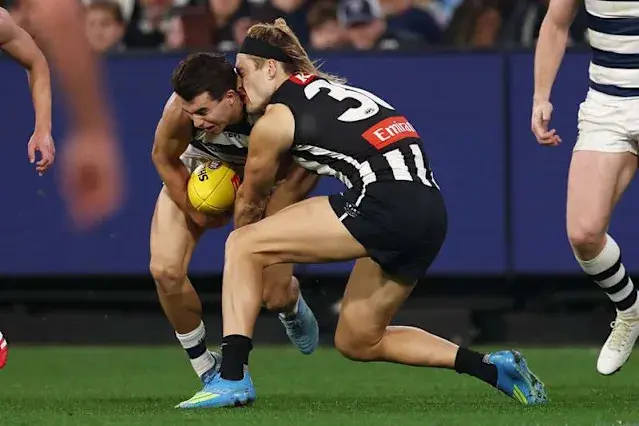
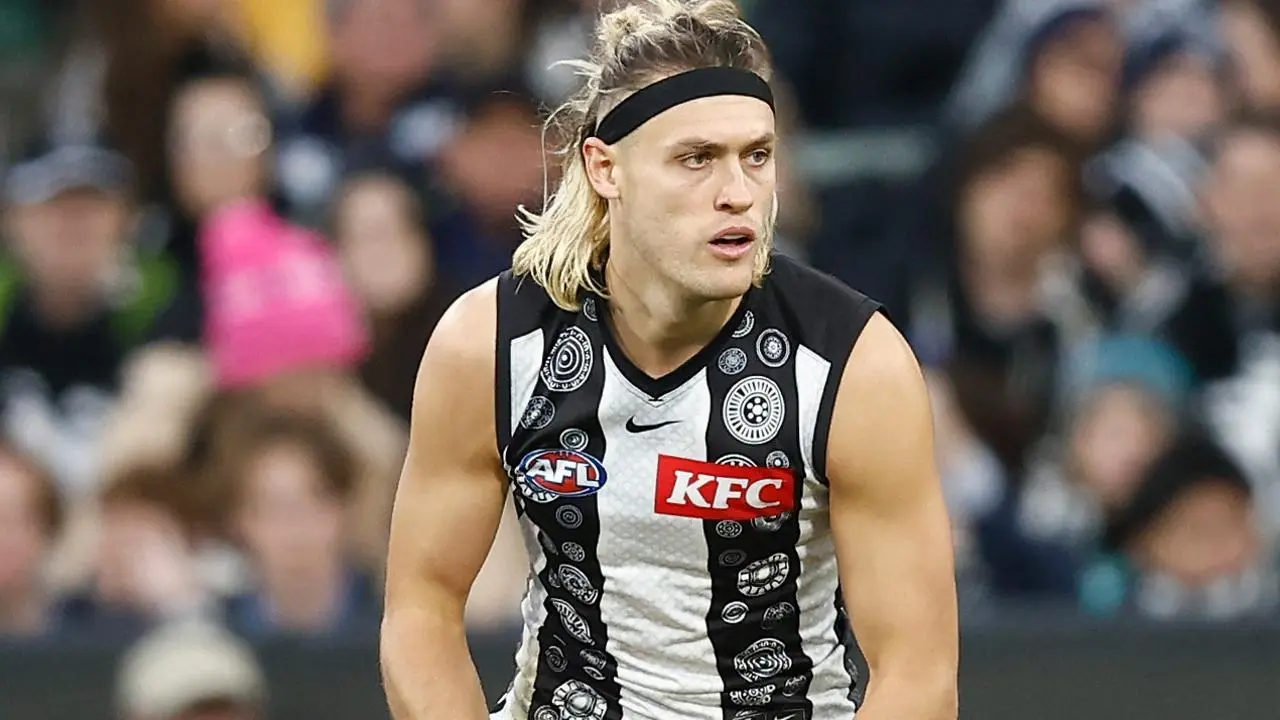
Everything exploded late in the third quarter when Darcy Moore charged toward a contested ball near the wing before suffering a horrifying high-speed collision that instantly silenced the stadium. Moore crashed violently onto the turf and remained motionless for several terrifying seconds while players from both teams backed away in visible shock. Medical staff sprinted onto the field as television cameras zoomed in on the Collingwood captain struggling to focus while trainers desperately attempted to stabilize him.
The expressions on the faces of nearby players immediately revealed the seriousness of the situation, and many supporters inside the ground reportedly feared the worst as Moore slowly attempted to stand before collapsing back toward the trainers assisting him under intense pressure.
The replay ignited absolute chaos across Australian social media within minutes. Television broadcasters repeatedly showed the impact from multiple angles while AFL fans flooded the internet with furious accusations directed toward Collingwood and the broader culture surrounding the club. Some users described the Magpies as “dirty” and “dangerous,” while others claimed the team had become increasingly reckless as pressure mounted over inconsistent performances and criticism surrounding aging stars.
Several rival supporter pages demanded immediate suspensions and league intervention before the match had even officially ended, while other accounts accused the AFL of protecting high-profile clubs at the expense of player safety. The backlash spread so quickly that hashtags calling for investigations into Collingwood and restrictions on certain players began trending nationally across Australia before the teams had even reached their dressing rooms.
The emotional atmosphere inside the Collingwood rooms reportedly became devastating almost immediately after the match ended. According to journalists positioned outside the dressing area, players sat in near silence while televisions replayed the collision involving Darcy Moore over and over again in the background. Several younger footballers were allegedly left visibly shaken after opening their phones and seeing thousands of abusive messages flooding social media platforms in real time, while medical staff moved frantically between treatment areas assessing injuries suffered during the brutal contest.
Club insiders later described the mood as emotionally shattered, with coaches and senior staff desperately trying to prevent the situation from spiraling further out of control while reporters and cameras gathered outside demanding answers about the club’s conduct and the condition of their captain.
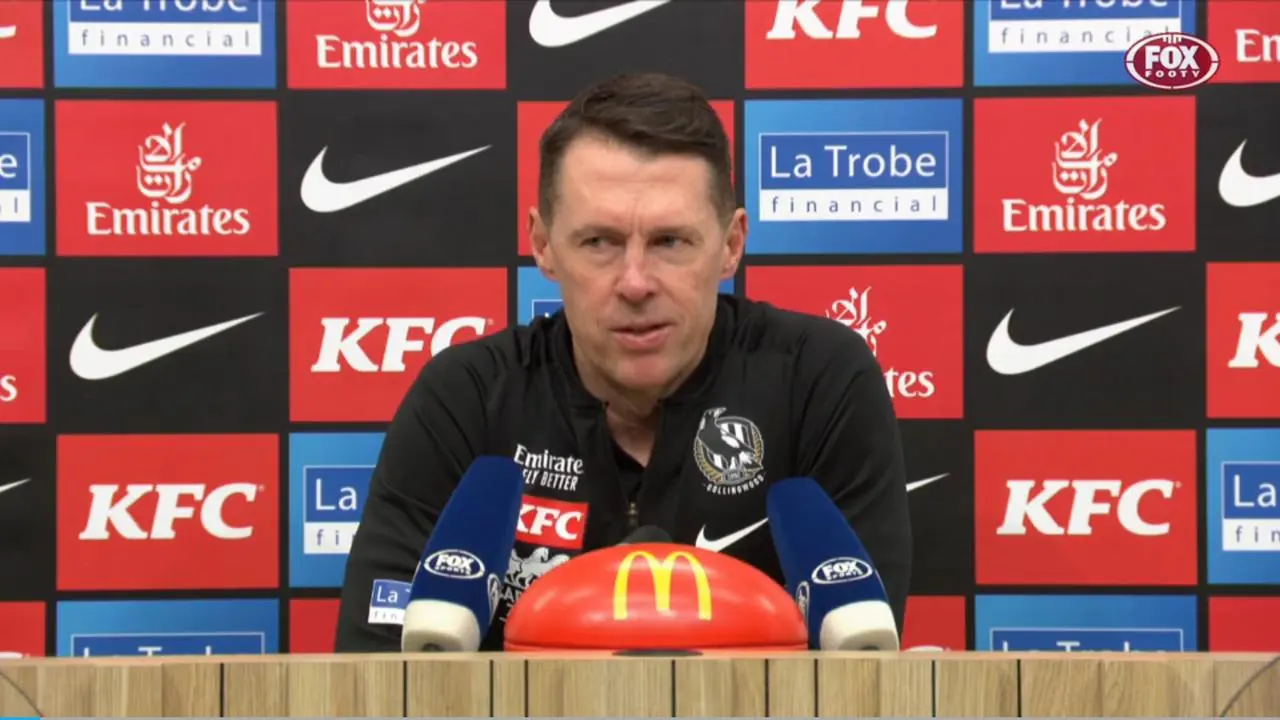
At the center of the storm stood Craig McRae, whose emotional collapse reportedly stunned even members of his own staff. Normally regarded as one of the calmest and most composed figures in Australian football, McRae allegedly lost his temper after hearing repeated accusations that his players were “past their prime” and “destroying the integrity of the competition.” Witnesses claimed the Collingwood coach became visibly emotional during heated exchanges behind closed doors as criticism from commentators, rival fans, and social media personalities intensified by the minute.
At one stage, several club officials reportedly attempted to calm McRae as he passionately defended his players from what he believed was becoming a nationwide public humiliation campaign targeting the entire club.
The situation became even more emotional when television cameras briefly entered the Collingwood dressing room during post-match coverage and captured scenes that immediately spread across Australia. While medical staff continued treating players and club officials rushed between conversations, Craig McRae could reportedly be seen standing completely alone near the back wall of the room, barely moving while chaos unfolded around him. His face appeared pale and emotionally drained as he stared silently toward the floor while players sat motionless nearby processing the disaster surrounding them.
At one point, cameras appeared to capture McRae lowering his head and wiping tears from his face before turning away from view, creating one of the most haunting and emotionally devastating images Australian football fans had seen in years.
The footage triggered another enormous wave of reaction online, with supporters and commentators fiercely divided over what the emotional scenes represented. Some defended McRae passionately, arguing that the Collingwood coach was watching his players become victims of a vicious online mob fueled by outrage and sensationalism. Others believed the emotional collapse reflected a club beginning to crack under relentless pressure after months of criticism surrounding physicality, discipline, and declining performances.
Regardless of opinion, however, almost everyone agreed that the atmosphere surrounding the AFL had suddenly entered deeply uncomfortable territory, where public outrage, social media hysteria, and emotional pressure were threatening to overwhelm the sport itself.
Meanwhile, the Australian Football League reportedly entered full crisis mode behind the scenes as league officials grew increasingly alarmed by the scale of the backlash erupting across Australia. According to multiple reports, senior executives organized emergency late-night meetings involving integrity officials, the Match Review Officer, and senior administrators after concerns emerged that the controversy was escalating far beyond ordinary sporting criticism. League insiders allegedly feared that growing boycott campaigns targeting Collingwood matches and AFL broadcasts could begin damaging the broader reputation of the competition if decisive action was not taken quickly.
Several major supporter accounts had already begun encouraging fans to pressure sponsors and avoid future matches involving the Magpies until stronger action regarding player safety was introduced.
The condition of Darcy Moore only intensified the emotional panic spreading throughout the football world. Although early medical evaluations suggested the Collingwood captain had avoided catastrophic injury, concussion specialists reportedly remained extremely cautious due to the violence of the collision and Moore’s visible disorientation after impact. Television networks continued replaying the incident throughout the night while experts debated whether the AFL’s current concussion protocols and physicality standards were still adequate for the modern game.
Former players appearing on live broadcasts openly questioned whether the sport was pushing athletes beyond reasonable limits in pursuit of entertainment, spectacle, and ratings, while some commentators warned that the AFL was approaching a dangerous breaking point regarding long-term player welfare.
Shortly before midnight, the AFL released an extraordinary public statement acknowledging the “serious emotional impact” surrounding the match and confirming that the incident involving Darcy Moore would undergo immediate review involving league executives and the Match Review Officer. The statement also urged supporters to stop targeting players and staff online while warning against dangerous speculation during ongoing medical assessments. However, the response did little to calm the fury exploding across Australian football, with critics accusing the league of reacting too slowly and avoiding deeper questions surrounding player safety, media sensationalism, and the growing emotional pressure crushing clubs behind the scenes.
By the time Australia woke up the following morning, the loss to Geelong had already evolved into something far bigger than football itself: a national emotional crisis exposing every fear, tension, and fracture currently tearing through the modern AFL landscape.